


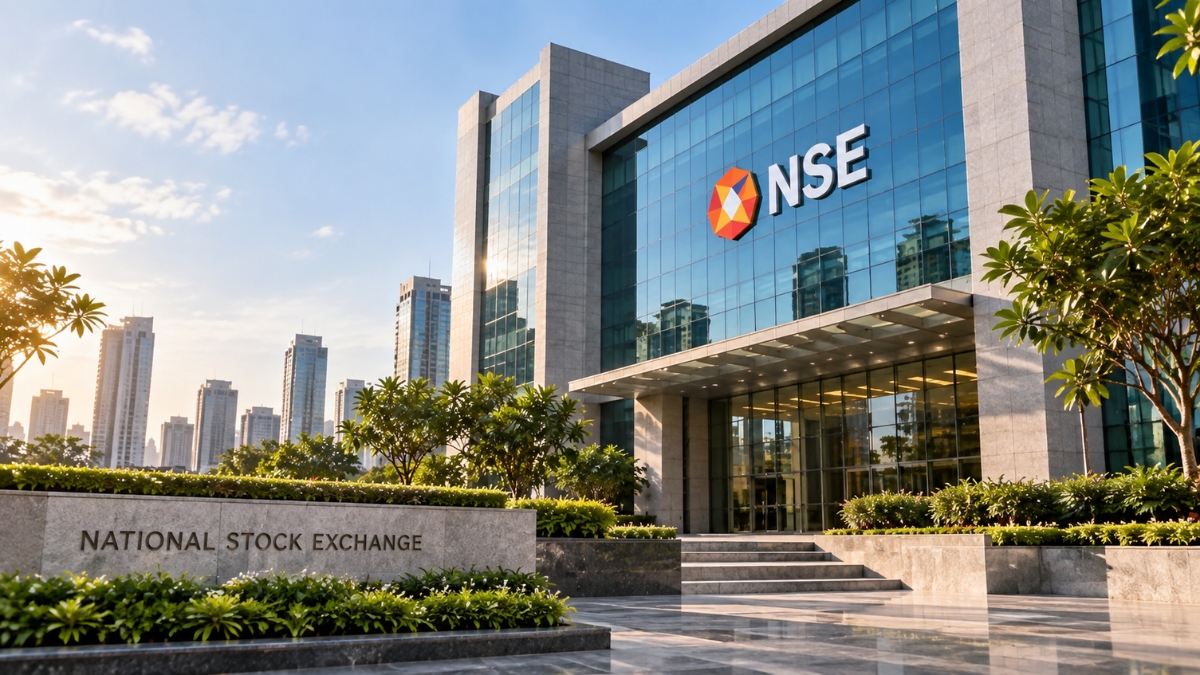
New Delhi [India], September 19: The National Stock Exchange’s ₹6,746 crore anchor book offers more than a snapshot of institutional demand for one of India’s most closely watched IPOs. It also provides a telling indication of how the balance of power within India’s investment banking ecosystem is evolving.
The most striking feature is the scale of domestic participation. Across the banking syndicate, domestic anchors accounted for approximately 51.4% of the total anchor mobilization, or around ₹3,464 crore. This puts domestic institutions marginally ahead of their international counterparts in the overall anchor mobilization.
The concentration becomes even more interesting when the leading bankers are examined in terms of the anchor investments they garnered. Five domestic merchant bankers, Kotak Mahindra Capital, SBICAPS, JM Financial, Axis Capital and Pantomath Capital, together brought in ₹3,261 crore, equivalent to about 48.3% of the entire ₹6,746 crore anchor book. Their combined mobilization was almost in the same range of ₹3,282 crore brought in by Morgan Stanley, Citi, HSBC and JP Morgan together. The composition of the domestic cohort is also telling, with established franchises such as Kotak Mahindra Capital, SBICAPS, JM Financial and Axis Capital appearing alongside a newer-generation banker, Pantomath Capital.
The numbers are significant because they illustrate how India’s domestic capital market infrastructure has deepened. Global investment banks continue to provide access to international long-only funds, sovereign wealth funds and other overseas institutions.
On the other hand, domestic merchant bankers now have access to a much broader institutional pool comprising mutual funds, insurers, pension funds and other domestic investors. A ₹3,261 crore mobilization by five Indian merchant bankers, virtually matching the combined contribution of four major global banks, suggests that the domestic ecosystem has acquired considerably greater depth and institutional reach.
The composition of the anchor book reinforces this trend. Domestic mutual funds received nearly 37% of the allocation, while foreign portfolio investors accounted for about 43%. LIC emerged as the largest individual anchor investor, while global institutions including Norway’s Government Pension Fund Global, the Monetary Authority of Singapore and Abu Dhabi Investment Authority also participated.
What makes the NSE transaction particularly interesting, therefore, is not a simple domestic-versus-foreign comparison. Rather, it demonstrates that India’s primary market is increasingly supported by two substantial pools of institutional capital. International banks retain significant global distribution capabilities, while Indian merchant bankers are increasingly able to mobilize sizeable domestic and institutional demand.
The NSE anchor book thus provides a useful marker of a broader transition: India’s primary market is no longer defined solely by the ability to tap global capital; it is increasingly underpinned by the scale, depth and growing sophistication of domestic institutional capital as well.
The National Stock Exchange of India (NSE) IPO continued its subscription process on September 19, with the issue already fully subscribed at 1.16 times by the end of Day 2, according to data available on the exchange’s website.
If you object to the content of this press release, please notify us at pr.error.rectification@gmail.com. We will respond and rectify the situation within 24 hours.
