
Bengaluru (Karnataka) [India], May 15: From Bengaluru to classrooms across 12 Indian states and beyond, one EdTech platform has made something most schools still consider optional into the standard: every student builds something real.
Skill Education That Goes the Distance
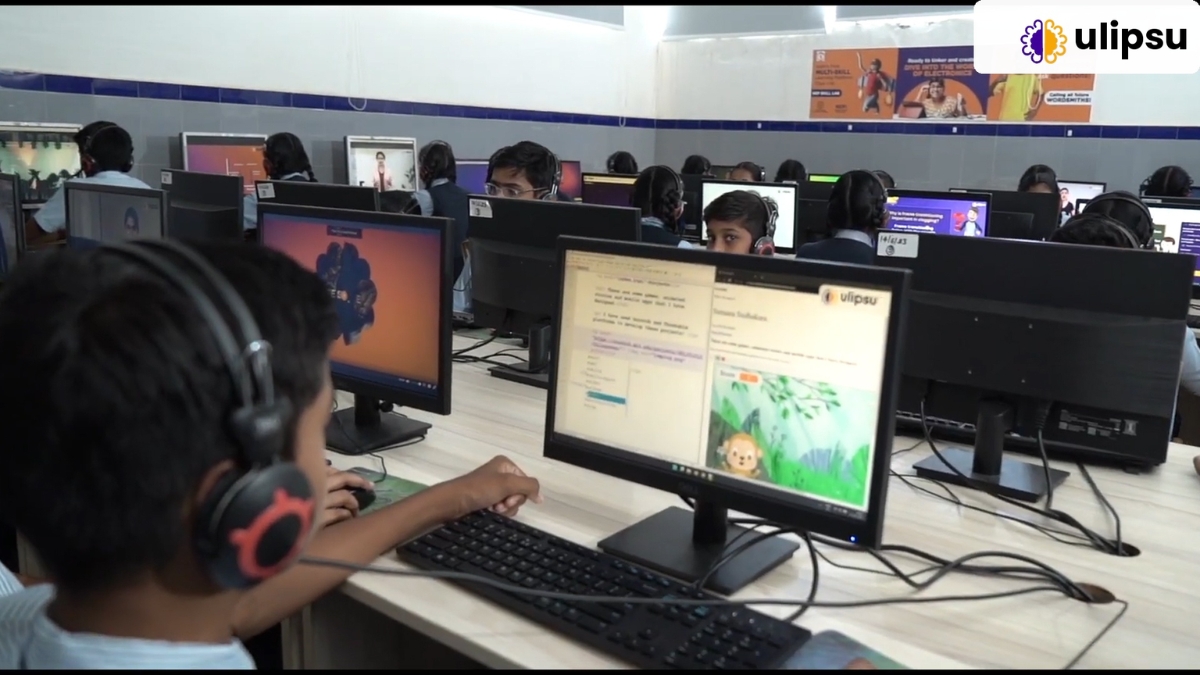
In classrooms across 500-plus schools in 12 Indian states and the Middle East, one thing is consistent: every student who completes a skill module on Ulipsu produces something — a project, submitted, assessed, and tied directly to the certificate they earn. That is not incidental to how the platform works. That is the entire point.
When Ulipsu’s founding team began building its curriculum eight years ago, they acted on a specific insight: turning learning into capability requires one step that most platforms skip — the moment a student stops consuming a lesson and starts building something with it. Ulipsu was designed to make that step unavoidable.
Today, Ulipsu reaches over five lakh students across its full network as of 2025-26. In the 2024-25 and 2025-26 academic years, students completed over 8.6 lakh hands-on projects and earned more than 1.28 lakh certifications across future-focused skill domains.
The Difference Between Knowing and Doing
Consuming a lesson and acquiring a skill are not the same thing. A student who has watched a series of videos on data science has encountered data science. A student who has collected a dataset, calculated moving averages, visualised outputs through charts, and written a structured report has used data science. The difference is not cosmetic — it is the difference between recognition and capability.
Ulipsu’s curriculum was built on that distinction. Every module is designed so that learning leads somewhere tangible: not just to a certificate, but to something the student has made.
Three Stages. No Shortcuts.
Every skill module on Ulipsu follows a three-stage structure, and the third stage cannot be skipped.
Students begin with video-based, gamified lessons that deliver real-time feedback as they learn. They then move through game-based evaluations that test genuine understanding rather than rote recall. The third stage is the project: a hands-on challenge in which the student builds something using what they have learned, submits it through the platform, and has it reviewed by their teacher.
Learn. Demonstrate understanding. Build. That sequence holds across every module from Grade 1 to Grade 10. The project is embedded into the evaluation structure of every module and is directly tied to the internationally accredited certificate the student receives upon completion.
What Students Actually Build
Across Ulipsu’s 16-plus skill modules, the project briefs are grounded in real-world challenges scaled to the school level. Students in the Data Science module collect datasets, calculate moving averages, and document their findings in structured reports. In the Coding module, more than 15,000 students created games using block-based coding platforms over the past two years, while over 5,000 built interactive storytelling projects combining narrative thinking with code logic.
In the Artificial Intelligence module, more than 3,100 students from higher grades completed Python-based projects, while nearly 6,000 built AI-powered solutions integrating concepts from artificial intelligence and data science. The Entrepreneurship module produced more than 55,000 startup and business concept submissions, alongside thousands of financial simulation and business decision-making projects built around real-world scenarios.
Every submission is recorded on the student’s individual Skill Report — a detailed document capturing assessment performance and project completions across every module completed. By the time a student reaches Class 10, their Skill Portfolio is not a list of certificates. It is a documented record of things they have built.
A Certificate That Means Something
Each student who completes a skill module — including its assessed project — receives an internationally accredited certificate co-branded with ISTE, recognised across 127 countries, and STEM.org, trusted in 80 countries. These credentials accumulate into a Skill Portfolio: a verifiable, evidence-backed record of applied learning that travels with the student throughout their academic career.
For school leaders, the Skill Portfolio also addresses a practical priority: NEP 2020, India’s National Education Policy, places explicit emphasis on skills-based, experiential learning outcomes. Ulipsu’s documented project records give schools a concrete, verifiable way to demonstrate that their students are meeting those goals — not through certificates alone, but through work produced and assessed in the classroom.
“We wanted the certificate to mean something,” said Nikhil K B, co-founder and CTO. “A student’s Skill Portfolio shows what they built, how they performed in assessments, and certifications aligned with recognised international accreditation standards. That is a very different conversation from a certificate that simply says they watched 12 videos.”
Every Student Gets There
When project work is optional, a predictable pattern emerges. Students who complete projects tend to be those who already have engaged parents, self-directed motivation, and time outside school hours to invest. Optionality, in most school environments, tends to benefit those who already have access — not those who need the opportunity most.
Ulipsu’s model removes that optionality entirely. The project is built into the curriculum. It is delivered during school hours and assessed by the teacher using a structured evaluation framework built into the platform. Every enrolled student completes it.
This has particular significance in Ulipsu’s government school deployments, which span 200 institutions serving 1.5 lakh students — many from first-generation learner households where after-school enrichment is simply not available. For these students, the embedded project component is the mechanism that takes their learning all the way to application, within the single point of access they have.
Building Deeper, Reaching Further
For Ulipsu, the next phase means expanding further across government schools, private institutions, and CSR-led education initiatives, ensuring that every student who completes a module gains a skill they can demonstrate, not just a certificate they can display.
The measure Ulipsu holds itself to is not the number of certificates issued or schools onboarded, it is whether students completing its modules can demonstrate their skills in practice. Not in theory. Not under recall conditions. Through work they have produced, submitted, and had assessed.
That structural commitment was made eight years ago. Over 10 lakh projects completed since then are evidence.
If you object to the content of this press release, please notify us at pr.error.rectification@gmail.com. We will respond and rectify the situation within 24 hours.
